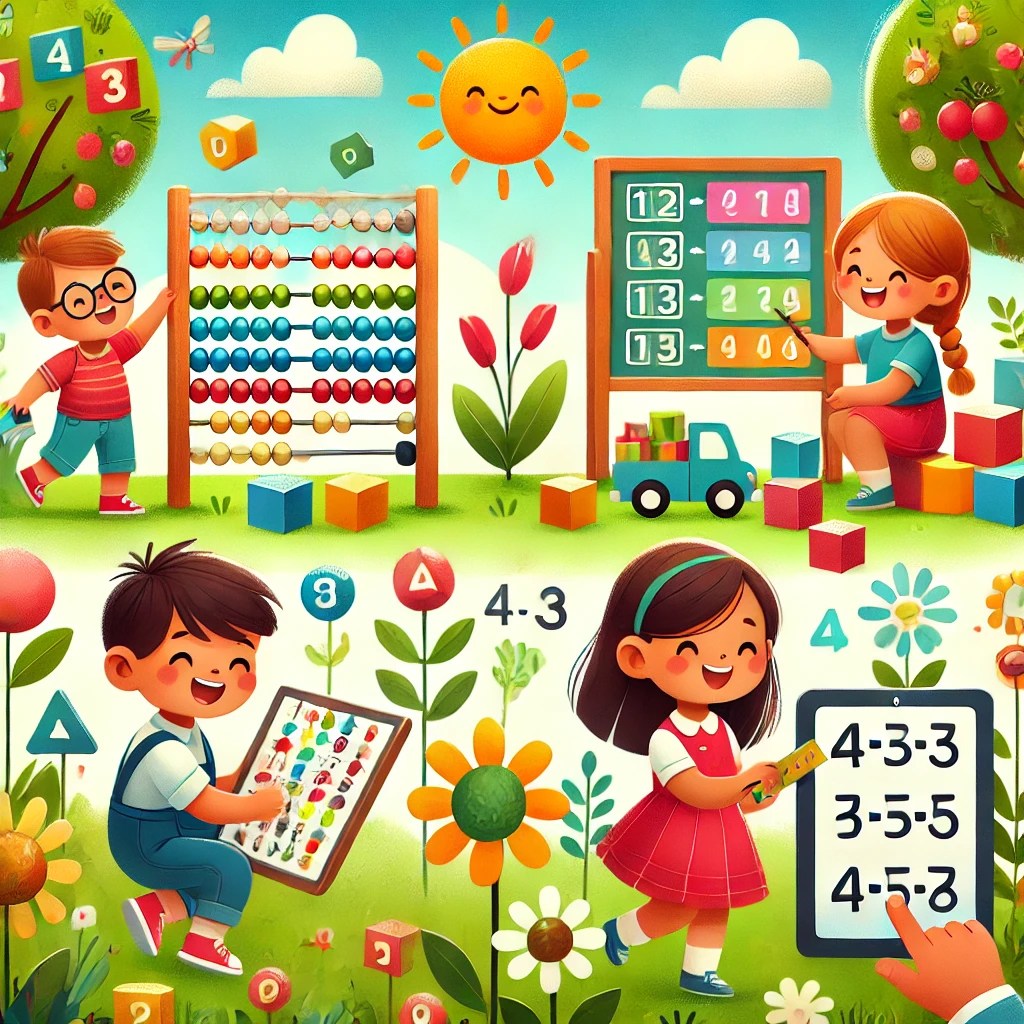
Mathematics can often be seen as a challenging subject for many children, leading to feelings of frustration or anxiety. But what if learning math could be as fun as playing a game, solving a riddle, or building with blocks? By making math more interactive and playful, children can engage with it in a way that sparks their curiosity, builds their confidence, and deepens their understanding.
In this blog, we’ll explore playful and creative methods that turn math from a source of stress into an exciting adventure. Whether it’s through games, hands-on activities, or real-world challenges, these approaches will help your child grasp key math concepts while having fun!
1. Math Through Games
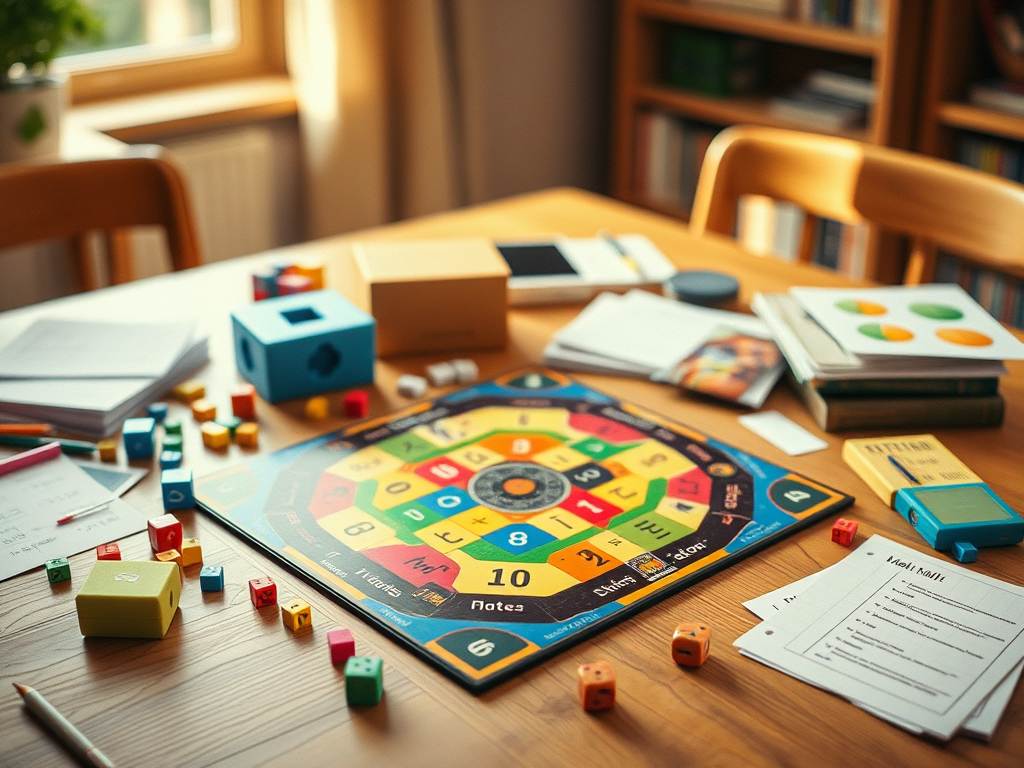
Children love games, and incorporating math into gameplay is an excellent way to make learning feel less like a chore. By playing games, kids not only practice math but also develop problem-solving skills and learn to think critically. Here are some game-based ideas:
Board Games: Popular games like Monopoly, Snakes and Ladders, or The Game of Life naturally integrate math concepts like counting, adding, and subtracting. Children can practice these skills without even realizing they’re learning.
Card Games: Simple games such as Uno, Go Fish, or even War can teach children how to recognize numbers, compare values, and develop strategies.
Digital Games: There are countless apps and online games designed specifically to teach math in a fun way. Games like Prodigy and Khan Academy Kids make learning math an adventure by incorporating challenges and rewards that motivate children to practice key concepts while playing.
2. Hands-On Activities
Math doesn’t have to be confined to worksheets or textbooks. Kids learn best when they can touch, build, and create—and hands-on activities make abstract concepts concrete.
Building with Blocks or Lego: Constructing with building blocks helps children understand patterns, shapes, and measurements. For example, counting how many blocks are needed to build a tower or using different-shaped blocks to create a design introduces spatial reasoning and basic geometry.
Cooking and Baking: The kitchen is a fantastic place to teach math! Measuring ingredients introduces fractions and volume, while doubling or halving a recipe helps children practice multiplication and division. Plus, the reward of a delicious treat at the end makes the learning even sweeter!
Puzzles and Tangrams: Encourage problem-solving with puzzles that require fitting pieces together. Tangrams, for example, are great for teaching geometry, as children must rotate and arrange shapes to form a picture.
3. Outdoor Math Adventures
Learning math outdoors combines physical activity with cognitive skills, making it an energizing and engaging experience. Fresh air and movement can do wonders for a child’s ability to concentrate and think creatively.
Scavenger Hunts: Design a scavenger hunt where children have to find a certain number of objects, such as “Find 3 red leaves” or “Find 4 objects shaped like a circle.” This simple activity teaches counting and shapes in a playful way.
Measuring in Nature: Take a ruler or tape measure on a nature walk and have children measure the height of trees, the length of sticks, or the distance between two points. This is a fun way to introduce measurements and comparisons.
Counting Games: On walks or trips, turn counting into a game. You can count how many cars of a certain color pass by, or how many steps it takes to walk to the park. Simple counting games like these build number sense without feeling like work.

4. Use of Music and Rhythm
Math and music have a lot in common—both involve patterns, counting, and sequences. Using rhythm and music can make math more engaging and memorable for children.
Songs and Rhymes: Songs like “Five Little Monkeys” or “Ten Green Bottles” are classics for teaching counting. Children can sing along while visualizing the numbers in a fun and rhythmic way.
Clapping Games: Introduce rhythmic clapping games where kids can count by twos, threes, or even tens. For example, clapping and counting up by fives helps children internalize multiplication tables while keeping their energy high.
5. Creative Math Challenges
Creativity and math can go hand-in-hand. Presenting math as a puzzle or a riddle stimulates curiosity and critical thinking, making math feel more like an exciting challenge.
Story Problems: Storytelling is a powerful tool in education. Present math problems in the form of stories or real-life situations. For example, “Tom has 8 apples and gives 3 to his friend. How many does he have left?” Adding context to problems helps children visualize and relate to the math concepts.
Art and Math: Art projects can easily integrate math, especially with activities involving shapes, symmetry, and patterns. Have children fold paper (like origami), create geometric designs, or make patterns with stamps or colors to explore math visually and creatively.
6. Incorporating Technology
In today’s digital age, technology offers endless resources to make math more interactive and accessible.
Math Apps: Fun and educational apps like DragonBox and Math Bingo help children practice math skills in a game-like environment. These apps make learning feel more like a fun challenge than a task.
Interactive Videos: There are great online resources, such as Numberblocks on YouTube, that teach math concepts through engaging, animated stories. These videos provide visual and auditory learning opportunities, helping children better understand tricky concepts.
7. Making Math Real-World Relevant
One of the best ways to help children understand math is to show them how it’s used in real life.
Shopping: Take your child on a shopping trip and involve them in adding up totals, comparing prices, or calculating discounts. These real-world applications help them see the relevance of math in daily life.
Time and Schedules: Teach time management and scheduling by having your child calculate the duration of activities or create a daily timetable. Understanding time is a fundamental math skill, and using a clock helps them grasp concepts like addition and subtraction.
DIY Projects: Engage your child in DIY home projects, like building a shelf or creating a garden plot. Measuring materials and calculating how much is needed are practical ways to practice math in everyday life.
Conclusion
Math doesn’t have to be difficult or boring. By turning math lessons into playful and creative activities, children can develop a deep understanding of mathematical concepts while enjoying the process. Whether through games, hands-on projects, or real-world applications, these playful methods make math not only accessible but exciting for children. So, the next time your child feels stuck on a math problem, try one of these fun approaches—you might just spark a lifelong love for numbers!
 Blossomify Community Interest Company